Why Your Kitchen Will Never Taste Like Gaziantep (And What That Means for Your Next Trip)
Let's say you've just come home from a trip to Gaziantep. You're standing in your kitchen in Columbus or Portland or Charlotte, armed with a suitcase full of dried chilies, hand-ground pepper paste, and optimistic energy. You pull up a recipe for beyran or ali nazik and get to work. An hour later, you take a bite — and something is just... off.
Don't take it personally. According to the people who have spent their entire lives working with Gaziantep's food, that gap between what you tasted in the city and what comes out of your home oven is not a failure of technique. It's a feature, not a bug.
The Spice Bazaar Isn't Just a Market — It's a Living Archive
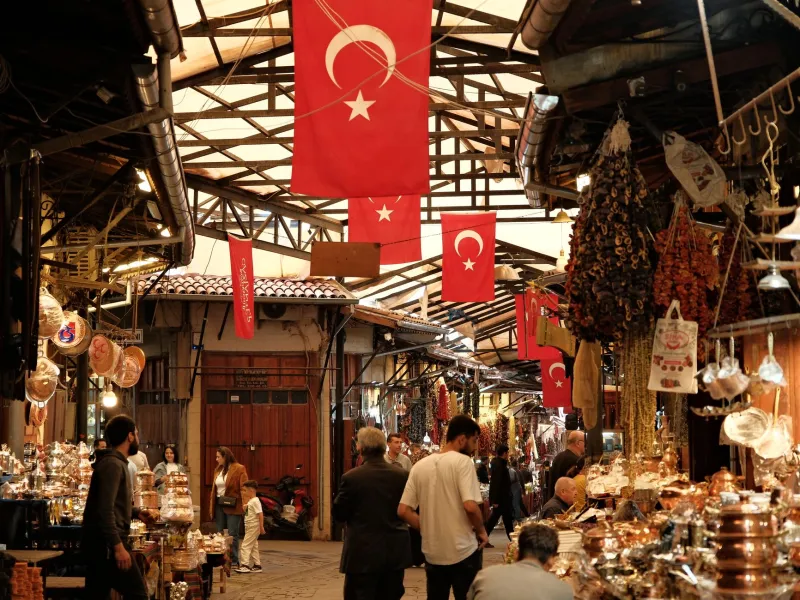
Walk into the Zincirli Bedesten, the covered spice market tucked inside Gaziantep's old city, and you're immediately hit with something that no candle company has ever successfully bottled. Layers of red pepper, cumin, dried herbs, and roasted nuts hang in the air like a fog. The vendors here — many of them third- or fourth-generation merchants — aren't just selling product. They're maintaining a catalog of flavor that stretches back centuries.
Mehmet, a spice dealer whose family has operated in the same corner of the bazaar for over sixty years, explains it with quiet confidence: "People come from Istanbul, from Germany, from America. They buy everything I sell. They go home. Then they come back and ask me what went wrong." He smiles and adjusts a tray of crimson isot pepper flakes — the smoky, almost chocolatey dried chili that is arguably Gaziantep's most iconic ingredient. "The pepper is not the same anywhere else. You cannot take the sun and the soil with you in a bag."
He has a point that goes beyond poetry. Isot pepper — sometimes called Urfa biber in the US, though purists will tell you that's a loose approximation — is sun-dried in a very specific way, then wrapped overnight to sweat and deepen in color and complexity. The process is tied to the region's particular climate and, more importantly, to the tacit knowledge passed down through generations of processors who know, by touch and smell, exactly when the pepper has hit its peak. That's not a recipe. That's institutional memory.
Why Technique Travels Badly
Chef Ayşe, who runs a small but fiercely respected ocakbaşı restaurant near the Hasan Süzer Ethnography Museum, laughs warmly when asked whether she's ever considered opening a location abroad. "My mother taught me with her hands," she says, pressing her palms together. "The pressure, the timing, the feel of the dough — I cannot write that down for you."
She's talking about katmer, the paper-thin pastry filled with clotted cream and crushed pistachios that Gaziantep residents eat for breakfast with an almost religious devotion. To the uninitiated, it looks simple — a few layers of dough, some butter, some filling. But Ayşe's version shatters at the edges and melts at the center in a way that defies the apparent simplicity of the ingredients. "My apprentice worked beside me for two years before hers tasted right," she adds. "And she grew up here."
This is the part that food tourists often underestimate. Gaziantep's culinary identity isn't just about exotic ingredients — it's about a continuous chain of embodied knowledge that doesn't transfer easily across time zones or cultural contexts. The city has, according to UNESCO, which granted it Creative City of Gastronomy status in 2015, more than 400 distinct dishes. Many of those dishes exist in forms that are meaningfully different from what you'd find even two hours away in another Turkish city.
The Pistachio Problem
No conversation about Gaziantep's food culture is complete without talking about pistachios — specifically, the small, intensely green Antep fıstığı that the city has cultivated for so long that the nut literally bears a version of the city's old name. These are not the same as the pistachios at your local Trader Joe's. They're smaller, oilier, and carry a grassy sweetness that American-grown or Iranian-grown pistachios simply don't replicate.
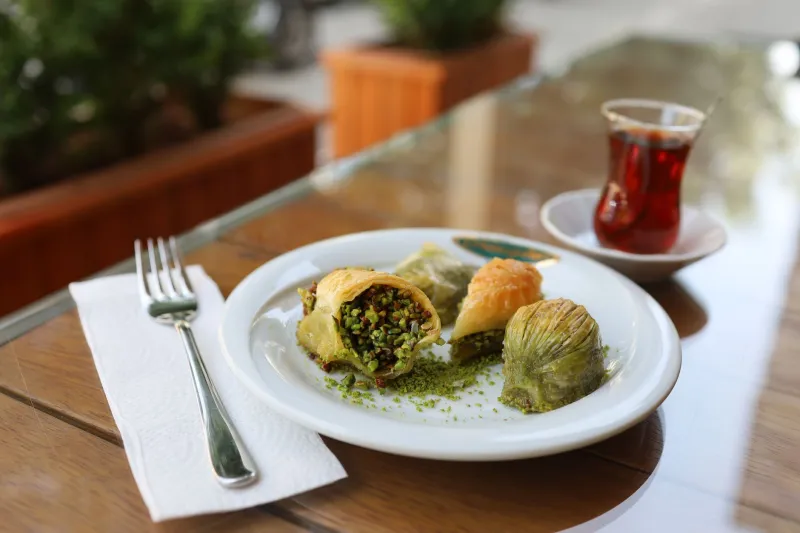
Local baklava masters — and Gaziantep takes its baklava extremely seriously, to the point where the regional style has protected geographical indication status in the EU — use these pistachios raw and freshly ground, not roasted. The result is a filling that's almost creamy, vibrant green, and intensely aromatic. Import the nut, and you lose the freshness. Roast it, and you lose the character entirely. It's a flavor that exists fully only in the place that grows it.
So What's the Point of Going?
All of this might sound discouraging if you're someone who likes to bring the world into your kitchen. But for travelers, it's actually the best possible news. Gaziantep is one of those rare destinations where the food genuinely cannot be fully experienced anywhere else on earth. That's not marketing language — it's the honest assessment of the merchants, chefs, and food historians who live and work there.
For American visitors especially, who are accustomed to being able to find a passable version of almost any global cuisine within driving distance, the experience of eating in Gaziantep can feel almost disorienting. This is what it tastes like when a dish has never had to travel. When the pepper was dried twenty miles away, when the cream came from this morning, when the cook learned from someone who learned from someone who learned from someone.
The city rewards slow visitors — people who linger in the bazaar, ask questions, and accept that some knowledge is best absorbed in person. Take a cooking class if you can find one. Watch a baklava master work at dawn. Let a spice merchant explain the difference between two varieties of red pepper that look nearly identical but taste like entirely different conversations.
You'll still go home and try to recreate it. That's fine. That's what good travel food does — it haunts you productively. But you'll also understand, maybe for the first time, why some places earn the word irreplaceable.
Gaziantep is one of them.