Forget Everything You Think You Know About Baklava — Gaziantep's Version Is Playing a Different Game
Most Americans have tasted baklava at a Greek restaurant or grabbed a box from a grocery store bakery and thought they had a pretty solid handle on the stuff. They didn't. Gaziantep's version of the beloved pastry is so distinct — so refined in technique and so dependent on hyper-local ingredients — that tasting it for the first time feels less like eating dessert and more like having an argument you didn't know you were losing.
This is not a knock on the baklava you've enjoyed at your neighborhood Mediterranean spot. It's just that what gets served in most of the world under that name is, to put it gently, a distant cousin of what's being made in southeastern Turkey's most celebrated city. And once you understand why Gaziantep's version stands apart, you'll probably start planning a trip.
The Honey Question (And Why It's Actually the Wrong Question)
Here's the first thing that surprises most American visitors: traditional Gaziantep baklava isn't made with honey at all. The syrup that saturates those paper-thin layers is a simple syrup built from sugar, water, and a small squeeze of lemon — nothing more. Honey, it turns out, can compete with the filling rather than complement it, muddying the delicate flavor of the pistachios beneath.
And those pistachios are the whole point.
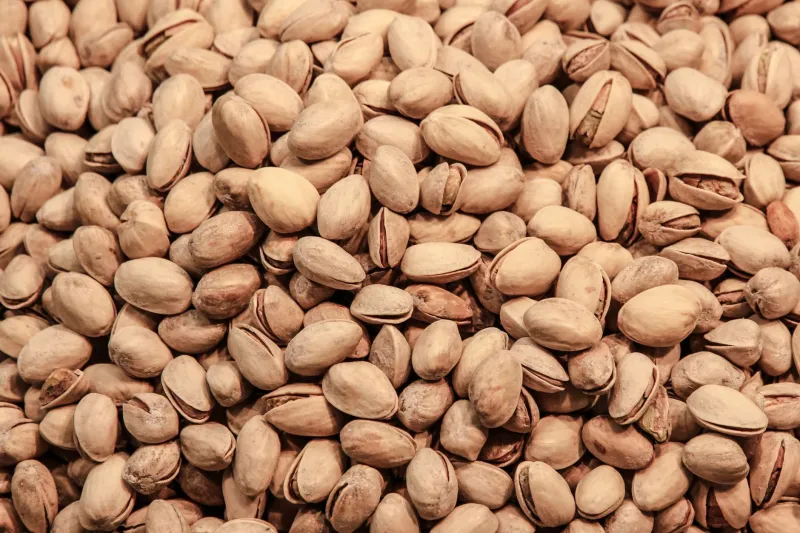
Gaziantep sits at the heart of Turkey's pistachio-growing region, and the local variety — smaller, greener, and more intensely flavored than the California pistachios most Americans buy in bulk — is the non-negotiable star of the show. Local pastry makers, known as baklavacılar, are almost evangelical about this. "You cannot separate the baklava from the pistachio," one artisan at a family-run shop near the city's historic bazaar explained through a translator. "Change the nut and you change everything. It is not baklava anymore. It is something else."
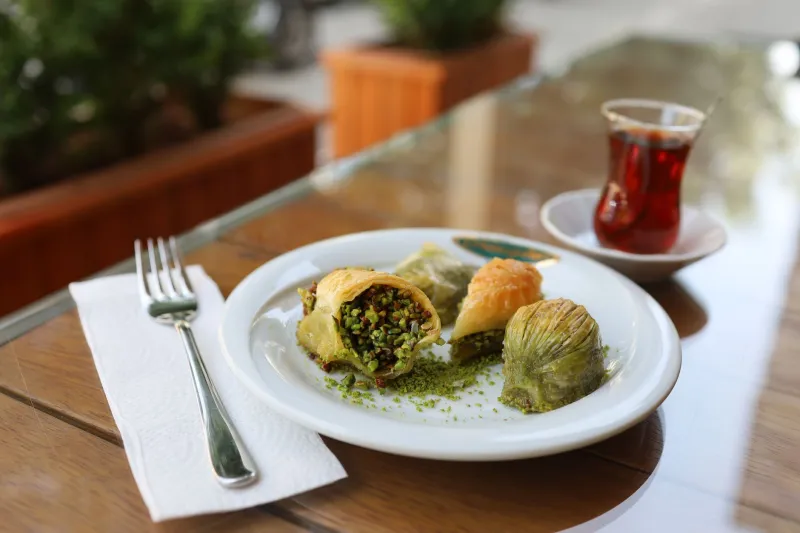
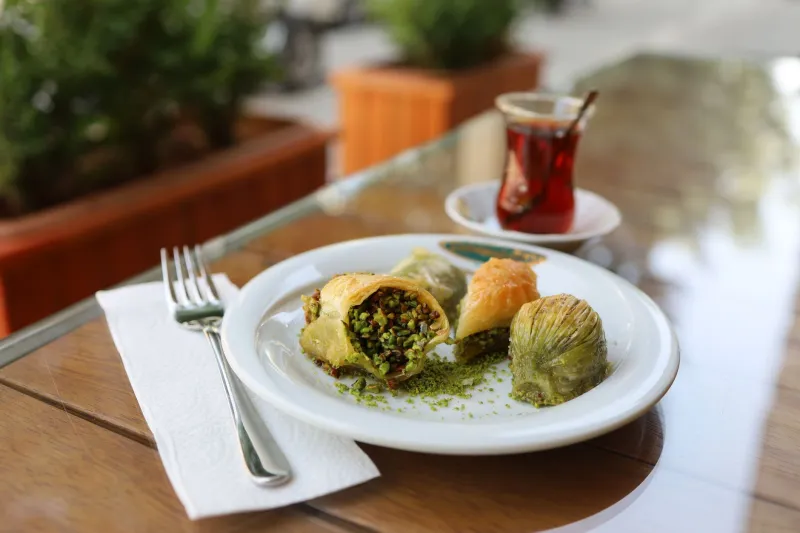
The ratio of nut to pastry in Gaziantep's style skews heavily toward the filling — a generous, almost reckless amount of finely ground pistachio packed between layers so thin they're practically translucent. The result is a bite that leads with a grassy, almost savory nuttiness before the sweetness of the syrup arrives as a quiet finish, not a sledgehammer.
The Dough Is the Detail Nobody Talks About
Phyllo dough is phyllo dough, right? Not exactly. The dough used in Gaziantep baklava — called yufka — is traditionally hand-rolled by craftspeople who've spent years developing the muscle memory to stretch it to near-impossible thinness without tearing it. A single tray of baklava might contain 40 or more individual layers, each one rolled separately.
Many commercial operations, both in the US and abroad, use machine-made phyllo, which is perfectly serviceable but noticeably thicker and more uniform than the handmade version. The difference in texture is subtle but real — handmade yufka has a slightly irregular quality that creates tiny air pockets, giving each layer a delicate crispness that holds up even after the syrup is poured.
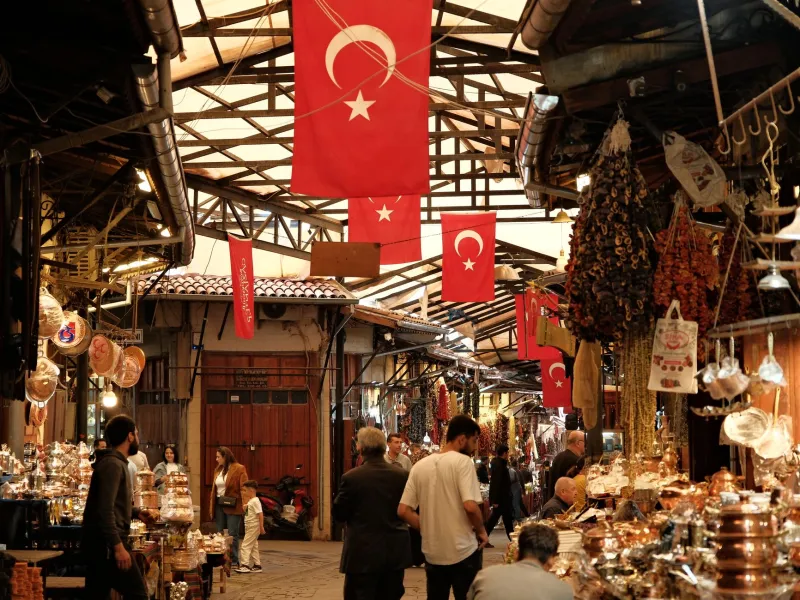
Several shops in Gaziantep still roll dough by hand every morning, and watching the process is a legitimate attraction in its own right. If you time your visit to the city's Copper Bazaar district correctly, you can catch bakers at work through storefront windows — it's the kind of behind-the-scenes moment that travel magazines promise but rarely deliver.
Why Geography Matters More Than You'd Think
Gaziantep's baklava didn't develop in a vacuum. The city's position along ancient Silk Road trade routes meant centuries of exposure to ingredients, techniques, and culinary ideas from across the Middle East and Central Asia. Pistachios came from the orchards just outside the city walls. Clarified butter arrived from dairy farms in the surrounding plains. The sugar syrup technique evolved locally over generations, refined by pastry makers competing for the business of merchants, Ottoman officials, and eventually tourists.
The city takes its baklava seriously enough that in 2013, Gaziantep baklava became the first Turkish product to receive a Protected Geographical Indication from the European Union — a designation that means authentic Gaziantep baklava must be produced within the province using local pistachios. Think of it like Champagne or Parmigiano-Reggiano: the name is legally tied to the place.
For American food lovers accustomed to the idea of terroir in wine or regional pride in barbecue, this concept translates pretty naturally. Gaziantep baklava isn't just a recipe. It's an expression of a specific landscape, a specific climate, and a specific community of craftspeople who've been refining the same product for hundreds of years.
What American Baklava Gets Right (And Where It Diverges)
To be fair, American baklava — particularly the versions made by Greek, Lebanese, and Arab communities across the country — has its own traditions and its own loyal fan base. Greek-style baklava leans into honey and often incorporates walnuts or a walnut-pistachio blend, producing a richer, stickier bite with a more pronounced floral sweetness. Lebanese versions sometimes include orange blossom water, adding a fragrant dimension that Gaziantep's style deliberately avoids.
None of these are wrong. They're just different conversations about the same basic idea. What makes the Gaziantep version distinctive is its restraint — the way it refuses to overload the palate, the way the pistachio flavor stays clean and present from first bite to last.
"American baklava is sweet," one Gaziantep baker noted with a diplomatic smile. "Ours is balanced."
Making the Pilgrimage
If you're the kind of person who will drive two hours out of your way for the best barbecue in a state, or wait in a two-hour line for a specific slice of pizza, Gaziantep baklava belongs on your culinary bucket list. The city's historic baklava shops — some of which have been operating under the same family name for four or five generations — are concentrated in and around the old bazaar district, making it easy to taste your way through several styles in a single afternoon.
Prices are almost absurdly reasonable by American standards, and most shops will vacuum-seal purchases for the flight home. Fair warning: airport security may raise an eyebrow at the quantity you're carrying, but that's a problem worth having.
Gaziantep Panorama's honest recommendation? Budget at least one full afternoon for baklava alone. Visit two or three shops, compare styles, talk to the bakers if you can, and resist the urge to eat standing up over the display case — though honestly, nobody's going to judge you if you do.