Why Serious Food Travelers Are Skipping Rome and Booking Flights to Gaziantep Instead
Something quietly seismic is happening in the world of culinary travel. The Americans who once planned their dream trips around Michelin-starred trattorias in Bologna or pintxos crawls through San Sebastián are increasingly landing in a different city altogether — one with no Eiffel Tower, no Colosseum, and no glossy tourism infrastructure designed to make visitors feel comfortable and curated. They're landing in Gaziantep, Turkey, and they're coming back changed.
This isn't a mass migration. It's more of a whisper network — spreading through the back channels of food media, professional chef circles, and the group chats of people who treat eating the way others treat extreme sports. But the whisper is getting louder, and the travel patterns are starting to show it.
The Europe Problem Nobody Talks About
Here's the uncomfortable truth that food-obsessed travelers are slowly admitting to themselves: the famous culinary destinations of Western Europe have, in many cases, been loved a little too hard. That doesn't mean the food is bad — it absolutely isn't. But when a neighborhood trattoria in Florence has a QR code menu optimized for Google reviews and a host who's perfected his English pitch for American diners, something in the experience has shifted. The meal is still delicious. The authenticity, though, has been negotiated.
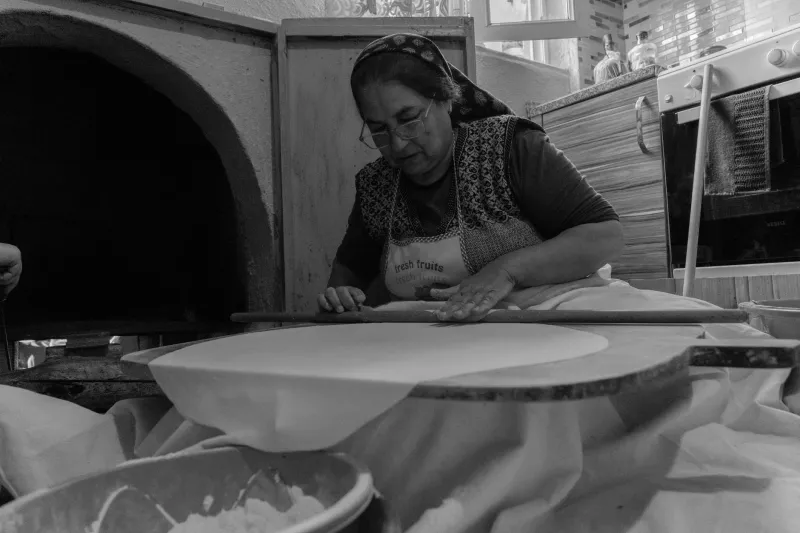
Gaziantep hasn't had that negotiation yet. The city's kebab masters aren't adjusting their spice levels for foreign palates. The women pressing dough in neighborhood bakeries aren't pausing for tourist photos. The baklava shops that have operated in the same family for four or five generations aren't running loyalty apps. When you eat in Gaziantep, you are eating food that exists for the people who live there — and you're simply lucky enough to be in the room.
That's a rarer and rarer thing in 2025, and food travelers with real mileage under their belts recognize it immediately.
The Chef-to-Chef Pipeline
Ask most Americans how they first heard about Gaziantep as a food destination, and the answer is almost always the same: someone in the food world told them. A chef they follow mentioned it in an interview. A food writer they trust came back from Turkey and couldn't stop posting. A culinary school instructor offhandedly called it one of the most important food cities on earth.
This word-of-mouth pipeline — running through professional kitchens, food journalism, and culinary academia — has been building for years. Gaziantep earned UNESCO Creative City of Gastronomy status back in 2015, a designation that carries enormous weight among people who care about food systems and culinary heritage. But that recognition took time to trickle down from industry insiders to the broader American traveling public.
Now it's trickling. And the travelers arriving as a result tend to be the kind who do their homework — who show up with a list of specific dishes to try, specific neighborhoods to walk through, and a genuine curiosity about why things taste the way they do here and nowhere else.
What Gaziantep Offers That Europe Simply Can't
Set aside the food for a moment — though we'll get back to it, because it's extraordinary. What Gaziantep offers on a structural level is the experience of a living culinary culture rather than a performed one. The city has roughly two million residents. It has a functioning economy built around food production, textile manufacturing, and trade. It has neighborhoods where people have lived for generations and where the local kebab spot is simply where you go on a Tuesday, not a destination you've reserved three weeks in advance.
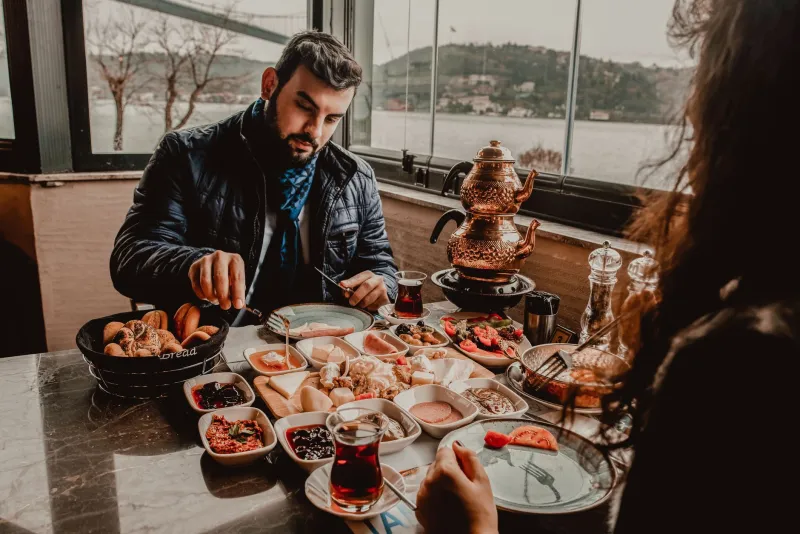
For American travelers who've done the European circuit, this feels revelatory. You can walk into a lokanta — a casual, home-style Turkish restaurant — order whatever the cook made that day, sit next to a table of local construction workers on their lunch break, and eat one of the best meals of your life for about eight dollars. That experience, uncurated and unrepeatable, is increasingly what food travelers are chasing.
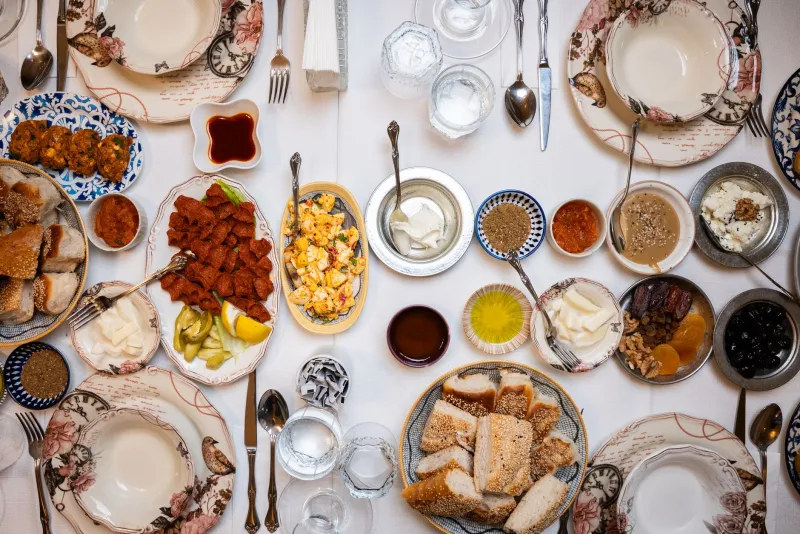
And then there's the food itself. Gaziantep's cuisine is built on a foundation of extraordinary local ingredients — pistachios from the surrounding orchards, dried peppers threaded on strings in the bazaar, lamb raised in the region's particular terrain — and techniques that have been refined over centuries of Silk Road commerce and cultural exchange. The flavor profiles are complex in ways that take you genuinely by surprise. The heat is different. The sweetness is different. The umami depth of a slow-cooked beyran soup at seven in the morning is different from anything you've encountered before, even if you consider yourself a well-traveled eater.
The Lack of Mass Tourism Is the Feature, Not the Bug
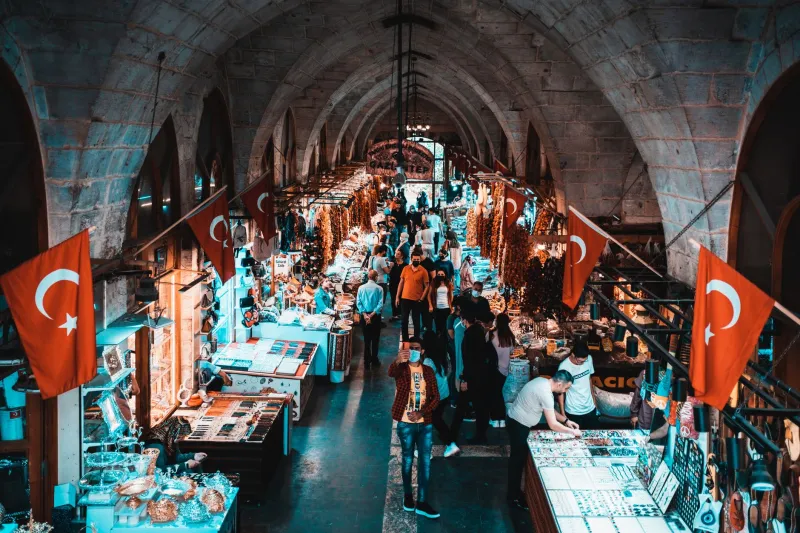
Gaziantep doesn't have a Sagrada Família. It doesn't have a Trevi Fountain. What it has is the Zeugma Mosaic Museum, which houses one of the finest collections of ancient Roman mosaics in the world and where you can often walk the galleries in near-solitude. It has a restored bazaar district where copper smiths and spice merchants operate in centuries-old hans. It has a castle that's been sitting on its volcanic rock since the sixth century, looking out over a city that has never really stopped being itself.
The relative absence of mass tourism infrastructure means prices are honest, interactions are genuine, and the city isn't contorting itself to meet your expectations. For travelers who've grown weary of the choreographed European experience — the hop-on-hop-off bus, the set-menu tourist lunch, the souvenir shop strategically placed between the monument and the exit — Gaziantep's straightforwardness is a genuine relief.
It also means you have to show up a little more prepared, a little more curious, and a little more willing to navigate uncertainty. That's not a drawback. That's the whole point.
So, Is This the Next Big Thing?
Maybe. Probably. But if you're reading this and thinking about going, the honest advice is to go now — before the infrastructure catches up, before the boutique hotels multiply, before the rooftop bars with translated menus start appearing near the bazaar. The Gaziantep that exists today, where the food is extraordinary and the tourist footprint is still light, is a specific and precious thing.
The travelers who've already been will tell you: there's before Gaziantep, and there's after. The food you eat there doesn't just satisfy you. It recalibrates you. And no amount of excellent pasta or perfect jamón has ever quite done the same thing.