While American Downtowns Empty Out, Gaziantep's Ancient Bazaars Are Somehow Packing In Bigger Crowds
Walk through any mid-sized American city on a Tuesday afternoon and you'll see the same dispiriting sight: shuttered storefronts, half-empty parking garages, a coffee shop clinging on by its fingernails. The retail apocalypse, as it's been called, has gutted commercial corridors from Akron to Albuquerque. And yet, on the other side of the Atlantic, a city of roughly two million people is running a completely different playbook — and winning.
Gaziantep's historic bazaars are not just surviving. They're packed.
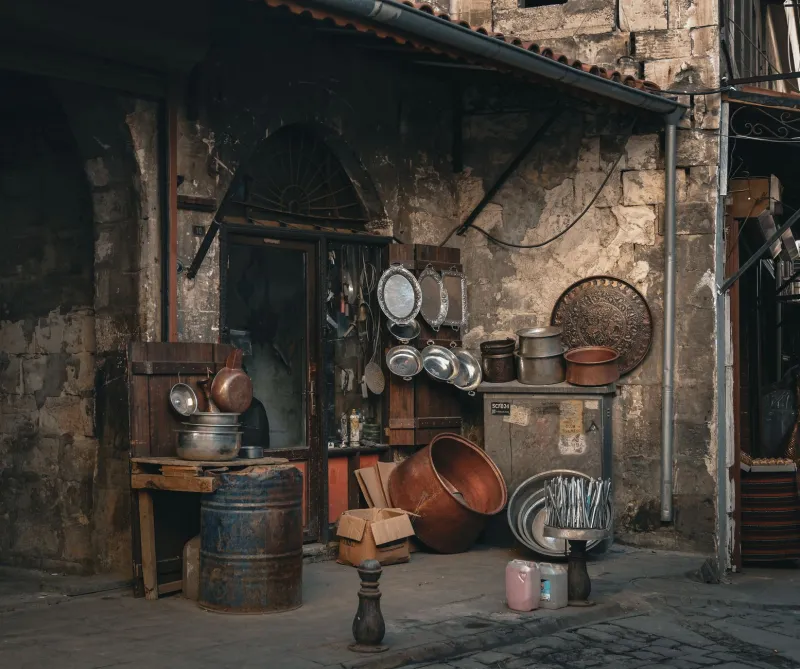
The Zincirli Bedesten, the Kürkçü Hanı, the copper market tucked behind the old citadel — these aren't museum pieces propped up by tourism grants. They're functioning, financially viable commercial spaces where real commerce happens every single day. That's worth examining carefully, because whatever Gaziantep is doing, it's something most Western cities have quietly given up on.
It's Not Nostalgia. It's Strategy.
Here's the first thing you have to understand: Gaziantep's bazaars didn't survive by accident, and they didn't survive by freezing themselves in amber. The merchants here adapted. When mass production threatened handmade copperware, artisans leaned harder into craft identity — positioning their work not as cheaper alternatives to factory goods but as irreplaceable cultural objects. When big-box stores arrived on the city's outskirts, the bazaar economy doubled down on specialization and expertise.
Ask any of the spice sellers in the old market district what they're actually selling, and they'll tell you it isn't spice. It's knowledge. The ability to tell a customer exactly which pepper variety will work in a specific lamb dish, which dried herb blend was traditional in which neighborhood — that kind of embedded, hyper-local expertise is something no algorithm has figured out how to replicate.
American retailers spent decades trying to compete with Amazon on Amazon's terms — price, speed, convenience. The Gaziantep bazaar model suggests a different path entirely: compete on depth, on human connection, on the things a warehouse in New Jersey simply cannot offer.
Community Ownership Changes Everything
One of the structural differences between Gaziantep's markets and struggling American retail districts is who actually owns the real estate. In many American downtowns, commercial properties are held by distant investment firms whose primary interest is maximizing per-square-foot returns. When a tenant can't meet rent, the space sits empty rather than being renegotiated — because vacancy can actually serve certain financial strategies better than a paying small business.
In Gaziantep's historic commercial core, the relationship between space and seller is far more tangled with community identity. Many of the hans — the old caravanserai-style market buildings — have operated under guild-like arrangements for generations. There's a social accountability built into the system. A merchant who abandons a stall isn't just leaving a lease; they're stepping away from a lineage.
That's not a system you can transplant wholesale into a struggling American strip mall. But the underlying principle — that commercial spaces should serve communities rather than extract from them — is something urban planners and city councils are increasingly trying to reconstruct through community land trusts and cooperative ownership models.
The Role of UNESCO and Cultural Pride
Gaziantep earned UNESCO Creative City of Gastronomy status in 2015, and the city has leveraged that designation with remarkable shrewdness. Rather than using it purely as a tourism marketing badge, civic leaders connected it directly to the economic identity of the bazaars. The markets aren't just places to shop — they're living proof of the city's claim to culinary world relevance.
That reframing matters. When a bazaar stall selling hand-ground pepper or house-blended baharat is understood as part of a globally recognized cultural heritage, the act of buying from it carries a different weight. You're not just buying spice. You're participating in something with a documented, internationally validated story.
American cities have tried versions of this — historic district designations, Main Street program certifications — but few have managed to connect those designations to the actual commercial identity of individual vendors the way Gaziantep has.
What Visitors Actually Experience
For American travelers landing in Gaziantep for the first time, the bazaar experience tends to produce a specific kind of culture shock — not the overwhelming, disorienting kind, but the quieter, more unsettling variety. The shock of realizing something you assumed was obsolete is actually working fine.
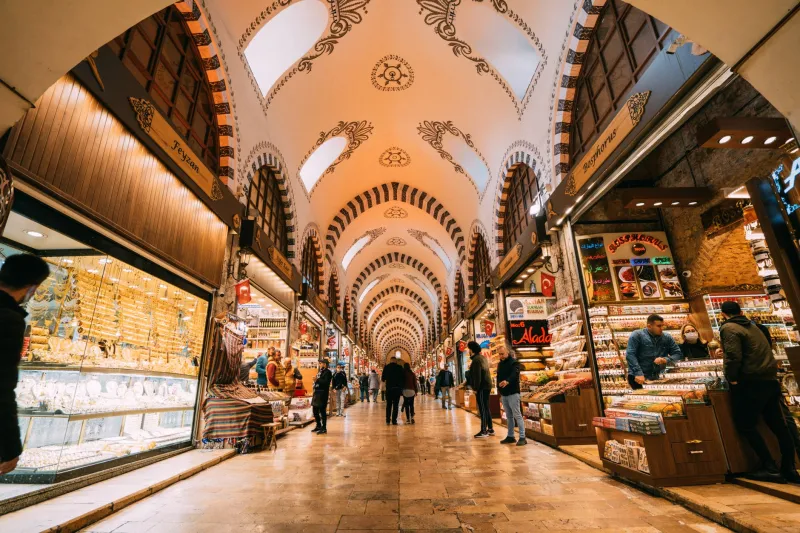
The covered markets here have light filtering through old stone archways. They smell like roasting nuts and dried herbs and something faintly metallic from the copper workshops nearby. People are genuinely busy — not performing busyness for tourists, but actually conducting commerce, arguing prices, loading goods onto handcarts. It feels like a city that hasn't decided its own center is expendable.
That feeling is, in itself, a kind of lesson.
Can Any of This Transfer?
Honestly? Not all of it. Gaziantep's bazaars are embedded in a cultural and economic context that took centuries to build. You can't recreate the guild memory or the generational property relationships or the specific role food identity plays in this city's self-understanding.
But some of it transfers. The emphasis on expertise over price competition. The deliberate connection between commercial spaces and civic identity. The refusal to let the market become purely transactional. The insistence that shopping, at its best, is a social act — something you do with people, not just at a screen.
American cities rebuilding their downtowns would do well to spend a few afternoons in a Gaziantep bedesten before finalizing their next revitalization plan. Not to copy what they see, but to remember that it's possible — that a market can be both ancient and alive, that commerce and community don't have to be in opposition.
Gaziantep figured that out a long time ago. The rest of us are still catching up.