The Green Gold Crisis: What's Really at Stake for Gaziantep's Pistachio Farmers
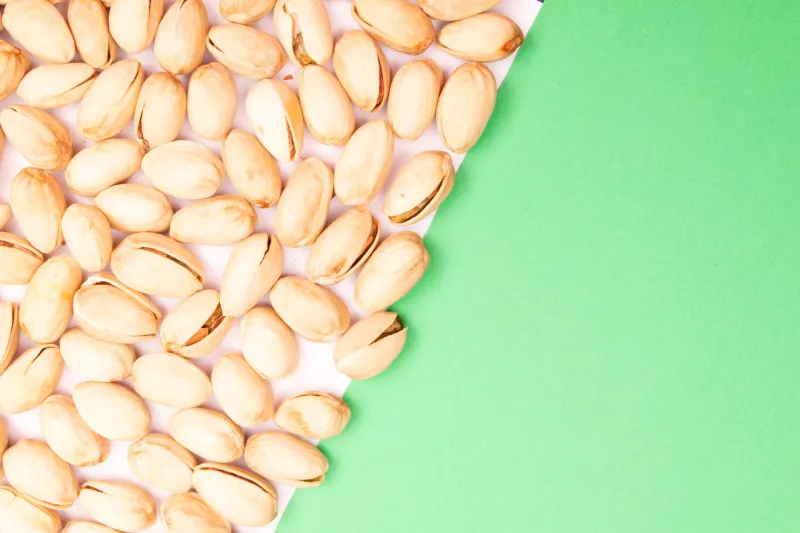
You've probably eaten them without thinking much about where they came from. They showed up in the baklava at a Turkish restaurant, or in a specialty food shop in a small kraft paper bag with a premium price tag, or maybe you've read enough about Gaziantep's cuisine to know that the city's pistachios are considered among the finest in the world. You know they're good. You might not know what it's costing to keep them that way.
The pistachio is Gaziantep's most famous agricultural product and, in many ways, the foundation of its culinary identity. The small, intensely flavored nut — greener, more aromatic, and less sweet than the California varieties most Americans buy at Costco — has been grown in the orchards surrounding the city for centuries. It built family fortunes, funded civic institutions, and wove itself so deeply into local cooking that it's hard to imagine what Gaziantep's food culture would look like without it.
But the pistachio's future is genuinely uncertain in ways that rarely make it into the feel-good food journalism that's introduced American audiences to the crop. The pressures are real, they're mounting, and they're worth understanding — especially if you care about where your food comes from.
A Crop Built for a Different Climate
Pistachios are remarkably well-adapted to the semi-arid conditions of southeastern Turkey. The trees are drought-tolerant, long-lived — a mature pistachio tree can produce for a century — and deeply suited to the rocky, mineral-rich soils of the Gaziantep plateau. For centuries, this natural alignment between crop and landscape made pistachio farming in the region relatively sustainable, if never exactly easy.
What's changed is the climate itself. Southeastern Turkey has experienced measurable shifts in rainfall patterns and temperature extremes over the past two decades, and the effects on pistachio production have been significant. The trees need a specific combination of cold winters and hot, dry summers to produce well — a chill period that triggers proper dormancy, followed by heat that drives fruit development. When those conditions get disrupted, yields suffer.
The 2021 and 2022 growing seasons saw particularly difficult conditions across the region, with late frosts damaging blossoms and irregular rainfall complicating irrigation management. Farmers who've worked these orchards for their entire lives describe a growing unpredictability that makes planning — and borrowing — increasingly risky.
The Economics of Patience
Here's something most American pistachio consumers don't know: a newly planted pistachio tree takes between seven and ten years to begin producing meaningful yields. The financial math of pistachio farming requires a degree of patience — and access to capital — that puts enormous pressure on smaller family operations.
Traditional pistachio farming in the Gaziantep region has always been organized around family orchards, often passed down through multiple generations. The trees themselves are the inheritance. But maintaining those orchards — managing irrigation, controlling pests, navigating the labor-intensive harvest — requires ongoing investment, and the returns are tied to global commodity markets that can swing dramatically based on factors completely outside a farmer's control.
When pistachio prices are high, as they've been in recent years due to strong global demand, larger commercial operations have the infrastructure to capitalize. Smaller family farmers, who may sell through intermediaries or local cooperatives, don't always see the same benefit. The premium that American consumers pay for Gaziantep pistachios doesn't automatically translate into prosperity for the people who grew them.
The Protected Designation Fight
Gaziantep pistachios hold a Protected Geographical Indication (PGI) status under European Union regulations and a Geographical Indication under Turkish law — legal frameworks designed to ensure that only pistachios genuinely grown in the designated region can be marketed under the Gaziantep name. This matters economically: the Gaziantep brand commands a premium, and protecting it from dilution by lower-quality nuts fraudulently marketed under the same label is a real and ongoing concern.
The enforcement of these protections is complicated. Turkish domestic market regulations and international trade frameworks don't always align neatly, and the growing global appetite for pistachios has created incentives for mislabeling and blending that undercut the authentic product. For farmers who've invested decades in producing genuinely high-quality nuts, the idea that their product's reputation could be eroded by inferior imitations is both an economic threat and a deeply personal affront.
For American buyers, this is a practical issue too. The pistachio you're buying at a specialty retailer may or may not be what it claims to be. Knowing your supplier, asking questions about sourcing, and paying attention to import documentation are the kinds of consumer behaviors that actually support the farmers doing the real work.
Innovation in the Orchard
Not everything in the picture is bleak. Gaziantep's agricultural community, along with Turkish government research institutions, has been investing in approaches designed to make pistachio farming more resilient. Drip irrigation systems are gradually replacing more water-intensive traditional methods, reducing the crop's dependence on increasingly unpredictable rainfall. Research into rootstock varieties that perform better under heat stress is ongoing. Younger farmers who've returned to family orchards after university education are bringing data-driven approaches to pest management and soil health.
There's also growing interest in organic certification for Gaziantep pistachios, driven partly by international market demand and partly by a genuine recognition that the chemical inputs that became common in the twentieth century are neither economically nor environmentally sustainable long-term. Transitioning to certified organic production is expensive and takes years, but the price premium it commands in export markets makes it a viable path for operations with the capital to absorb the transition costs.
What It Means for the Food Culture
The pistachio isn't just an agricultural product in Gaziantep. It's a cultural anchor. The nut shows up in everything from baklava and kadayıf to savory dishes, kebab preparations, and the kind of simple, unadorned handful that gets passed around at the end of a family meal. Its flavor profile — richer, more complex, and less sweet than what most Americans know — is embedded in the city's culinary identity at a fundamental level.
If climate change, economic pressure, and market disruption erode the pistachio farming culture of the Gaziantep region, the food culture changes with it. Not all at once, and not visibly at first — but the slow substitution of lower-quality imported nuts, the consolidation of small family orchards into larger commercial operations, the loss of the agricultural knowledge embedded in multi-generational farming families: these are the kinds of changes that hollow out a food tradition from the inside.
The Americans buying Gaziantep pistachios, or eating them in the baklava at their favorite Turkish restaurant, are connected to that story whether they know it or not. Knowing it seems like the least we can do.