The Keepers of the Kitchen: How Gaziantep's Unsung Women Cooks Are Finally Getting Their Flowers
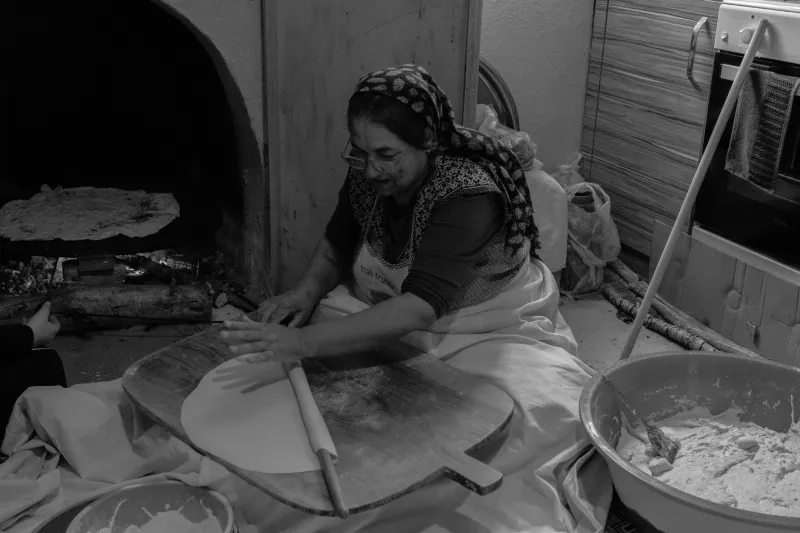
If you search for Gaziantep's most celebrated chefs in the English-language food press, you'll find a predictable cast of characters: male restaurateurs, male kebab masters, male baklava makers. They're talented, many of them genuinely exceptional, and their work deserves the recognition it gets. But spend any real time in the city — talking to locals, eating in homes, sitting in on cooking classes — and a different story emerges. The actual foundation of Gaziantep's extraordinary food culture has been built, maintained, and continuously innovated by women who have operated almost entirely outside the frame of public recognition.
That's been the arrangement for a long time. It's changing now, slowly and on the women's own terms. And the story of that change is worth paying attention to.
The Architecture of an Invisible Kitchen
To understand the role of women in Gaziantep's food culture, you have to understand how that culture actually functions. Unlike in many Western cities, where restaurant culture and home cooking exist in largely separate spheres, Gaziantep's culinary identity is rooted in the home kitchen. The city's most celebrated dishes — its specific style of kebab, its layered dolma, its slow-cooked legume stews, its dozens of varieties of preserved vegetables — were developed and refined not in professional kitchens but in family homes, passed from mother to daughter across generations.
The women who held this knowledge were, in a very real sense, the custodians of the city's culinary identity. They knew which dried pepper variety produced the right heat without bitterness. They knew the precise moment to add pomegranate molasses to a slow braise. They understood the difference between a good batch of biber salçası — the red pepper paste that anchors so much of Gaziantep cooking — and a great one.
None of this knowledge was written down. It was transmitted through proximity, through watching and doing, through the kind of tacit expertise that doesn't translate easily into recipes but is immediately apparent in the food itself.
What Gets Left Out of the Record
When Western food media began paying serious attention to Turkish cuisine — a process that's been accelerating over the past decade — the coverage largely defaulted to the most visible, most public faces of that cuisine. Restaurant owners. Competition winners. Men whose names were on signage.
This isn't unique to coverage of Turkey. The same pattern plays out in how Western media has historically covered food cultures from Mexico, India, Japan, and across the Middle East. The public-facing, commercially legible version of a food culture gets documented. The domestic, matriarchal, oral-tradition version largely doesn't.
For Gaziantep, this gap is particularly significant because the home kitchen is so central to what makes the city's food culture exceptional. Ignoring it doesn't just leave out some interesting context — it misses the actual point.
Women Who Are Changing the Equation
In recent years, a generation of Gaziantep women has begun moving their expertise from the home kitchen into more public-facing contexts, and the results are drawing attention both locally and internationally.
Fatma Şahin, who served as mayor of Gaziantep for over a decade, has been an outspoken advocate for recognizing women's contributions to the city's food culture, connecting that recognition to broader economic development goals. Under her tenure, Gaziantep received UNESCO Creative City of Gastronomy designation — an honor that has brought significant international attention and tourism.
But the more granular changes are happening at a smaller scale. Women like Hacer Doğan, who spent decades cooking for her family in the Şahinbey district, now teaches cooking classes out of her home kitchen to visitors and locals alike. Her classes aren't structured like a culinary school lesson. They're more like being invited into a family's kitchen to help with a meal — which is exactly the point. The knowledge she shares isn't from a textbook. It's from a lifetime of practice.
"My grandmother taught me," Doğan has said in interviews. "Her grandmother taught her. I'm not inventing anything. I'm just making sure it doesn't disappear."
Other women are opening small restaurants that function as extensions of home cooking rather than imitations of professional restaurant culture. These places typically don't have elaborate menus or formal service. They serve what's seasonal, what's traditional, what the cook knows how to make well. In a city already famous for its food, these spots are increasingly sought out by serious food travelers who've learned that the most interesting eating in Gaziantep often happens far from the tourist-facing establishments.
The Documentation Problem
One of the most urgent challenges facing Gaziantep's women-led food culture is documentation. The oral tradition that has preserved these recipes and techniques for centuries is fragile in the face of rapid urbanization and generational change. Young women in Gaziantep today have more options than their grandmothers did — more education, more professional opportunities — and many are not spending the years in the family kitchen that previous generations did.
Some organizations and researchers are working to address this. A handful of Turkish food writers and academics have begun oral history projects specifically focused on women's culinary knowledge in southeastern Turkey. The Gaziantep Cuisine Research and Promotion Foundation has made efforts to document traditional recipes, though the results are uneven and the work is far from complete.
For American visitors with a serious interest in food culture, this documentation gap creates both urgency and opportunity. The chance to sit in on a traditional home cooking class, to eat at a small woman-run restaurant, to spend an afternoon learning about regional ingredients from someone who has spent a lifetime working with them — these experiences are available now in ways they may not be in ten or twenty years.
What Recognition Actually Looks Like
The rise of Gaziantep's women chefs into greater public visibility isn't just a nice story about deserved recognition. It's also a useful lens for examining how the West decides whose food knowledge counts as expertise.
A male chef with a restaurant and a social media presence is legible to Western food media in a way that a woman who has spent forty years perfecting her family's recipe for içli köfte — stuffed meat dumplings with a bulgur shell — is not. Both possess extraordinary knowledge. Only one of them fits the existing template for what a food authority looks like.
As Gaziantep's women cooks gain more public platforms — through cooking classes, small restaurants, documentary projects, and social media accounts run by a younger generation — they're not just claiming recognition for themselves. They're pushing back on a much broader assumption about what culinary expertise looks like and where it lives.
For a city that has spent centuries quietly building one of the world's great food cultures, that's a conversation long overdue.