Lost in Translation: The Gaziantep Food Words That English Simply Cannot Hold
Every serious food culture eventually develops a language problem. The food gets so specific, so layered with meaning and memory and technique, that the existing vocabulary stops being adequate. New words get coined. Old words get repurposed. Idioms emerge that make perfect sense to insiders and baffle everyone else. This is exactly what happened in Gaziantep — and the result is a regional dialect with a culinary vocabulary so rich and so particular that even native Turkish speakers from other cities sometimes find themselves reaching for a translation.
For American visitors, the language gap can be a source of mild frustration — menus that don't translate cleanly, compliments that land differently than intended, questions about food that produce answers you don't quite understand. But once you start learning what's actually going on linguistically, that gap becomes one of the most interesting things about eating here.
Why Gaziantep Developed Its Own Food Language
Gaziantep sits at a crossroads that has been culturally and commercially significant for millennia. The city was a major stop on ancient trade routes connecting Anatolia to Mesopotamia, the Levant, and Persia. Arabic, Kurdish, Armenian, and various Turkic dialects all left their marks on the local language over centuries of contact and exchange.
The result is a regional Turkish dialect — sometimes called Antep ağzı (the Antep accent or way of speaking, Antep being the city's older name) — that contains vocabulary borrowed from Arabic, Persian loanwords absorbed through Ottoman-era commerce, and locally coined terms that exist nowhere else in the Turkish-speaking world. A significant chunk of this unique vocabulary is, unsurprisingly, food-related.
"Food was the primary context in which cultures interacted in this city for a very long time," explains one Gaziantep-based cultural researcher who has spent years documenting the dialect. "When traders from different places sat down to eat together, they needed to communicate about the food. Words got borrowed, adapted, and eventually became local. Some of those words are still in use today in forms you won't find in any standard Turkish dictionary."
Words That Don't Translate
Let's get into the actual vocabulary, because this is where things get genuinely fascinating.
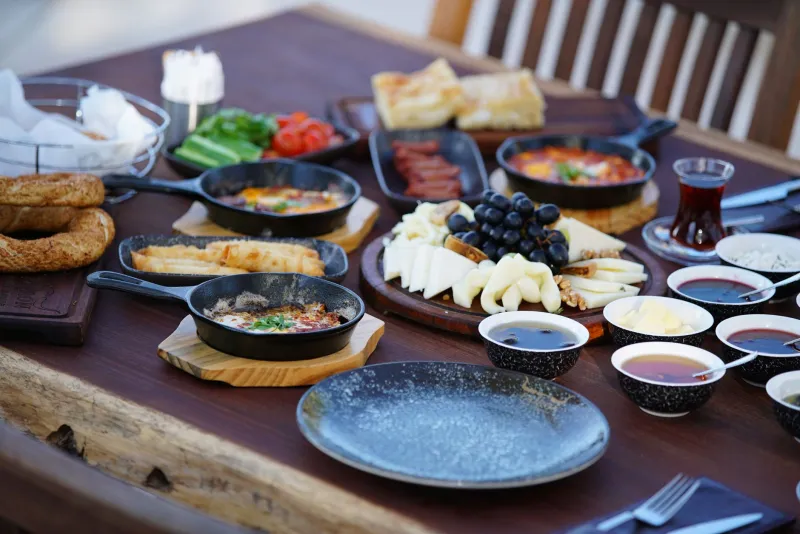
Sofra is a word that exists in standard Turkish — it refers to a dining table or a spread of food — but in Gaziantep, it carries considerably more weight. A sofra here isn't just a table with food on it. It implies a complete social event: the right food, prepared correctly, for the right people, in the right spirit. When a Gaziantep host says they're preparing a sofra for you, they're making a commitment that goes well beyond cooking dinner. They're promising an experience. Calling a hastily assembled meal a sofra would be, in local terms, something close to an insult to the concept.
Lezzet translates literally as "flavor" or "taste," but in local usage it functions more like a quality judgment that encompasses flavor, texture, aroma, temperature, and the emotional response a dish produces simultaneously. When a Gaziantep cook says something has good lezzet, they're not just saying it tastes good — they're saying it's right in a holistic sense. American visitors sometimes describe lezzet as the local equivalent of the Japanese concept of umami, but that comparison undersells it. Lezzet includes the whole sensory and emotional package.
Bereket (abundance, blessing) is used in food contexts throughout the Turkish-speaking world, but in Gaziantep it has a specific culinary application: it's what a meal is said to have when it seems to feed more people than it logically should. A pot of soup that keeps refilling, a tray of baklava that seems inexhaustible — that's bereket. It's considered a mark of a skilled and spiritually generous cook, and it's taken seriously in a way that might surprise American visitors who assume it's just a polite expression.
Perhaps the most untranslatable item in the local food lexicon is sıla, which in standard Turkish means something like "homeland" or "the place you're from." In Gaziantep, it's used to describe the specific flavor note in a dish that triggers a memory of home — the taste equivalent of nostalgia. A cook might say their grandmother's recipe has sıla that no restaurant version can replicate. It's not a flavor you can add. It's a flavor that accumulates through association, memory, and belonging.
The Idioms That Reveal a Culinary Philosophy
Beyond individual words, Gaziantep's dialect is full of food-based idioms that reveal how deeply cooking is embedded in the local worldview.
"Ellerine sağlık" — literally "health to your hands" — is the standard compliment paid to a cook after a meal. It's used throughout Turkey, but in Gaziantep, the response matters as much as the phrase itself. A proper Gaziantep cook responds with "afiyet olsun" (may it bring you well-being) while simultaneously deflecting the compliment toward the quality of the ingredients or the tradition they learned from. Accepting a cooking compliment too directly is considered slightly graceless. The compliment is always, in some sense, meant to pass through the cook to the tradition behind them.
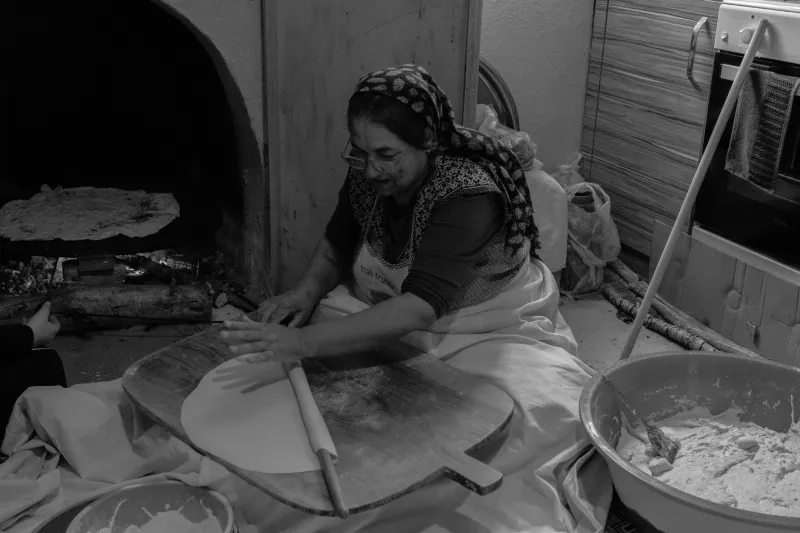
There's also a local expression — "kaynayan kazan" (the boiling pot) — used to describe a household that is always cooking, always ready to receive guests. Calling someone's home a kaynayan kazan is a genuine compliment in Gaziantep, implying warmth, generosity, and social vitality. The cooking is the metaphor for the household's character.
What This Means for American Visitors
You don't need to become fluent in Antep ağzı to eat well in Gaziantep. But understanding even the rough outlines of this culinary vocabulary changes the quality of your experience in a meaningful way.
When a host describes a meal as a sofra, recognize that they're telling you something about the level of care and intention behind it — and respond accordingly. When someone says a dish has lezzet, they're inviting you into an aesthetic conversation, not just passing a routine compliment. When you hear bereket used at the table, understand that you're watching a community express gratitude in a way that's simultaneously practical and spiritual.
The language barrier between American visitors and Gaziantep's food culture isn't just about vocabulary. It's about a different fundamental relationship between food and meaning — one where eating is rarely casual, cooking is rarely just functional, and the words used around the table carry the weight of centuries of accumulated cultural understanding.
Learning a few of those words won't make you a local. But it might make you a slightly better guest — and in a city where hospitality is considered a serious art form, that's not nothing.