Threads and Tastes: The Surprising Way Gaziantep's Carpet Weaving Heritage Built a Food Culture Like No Other
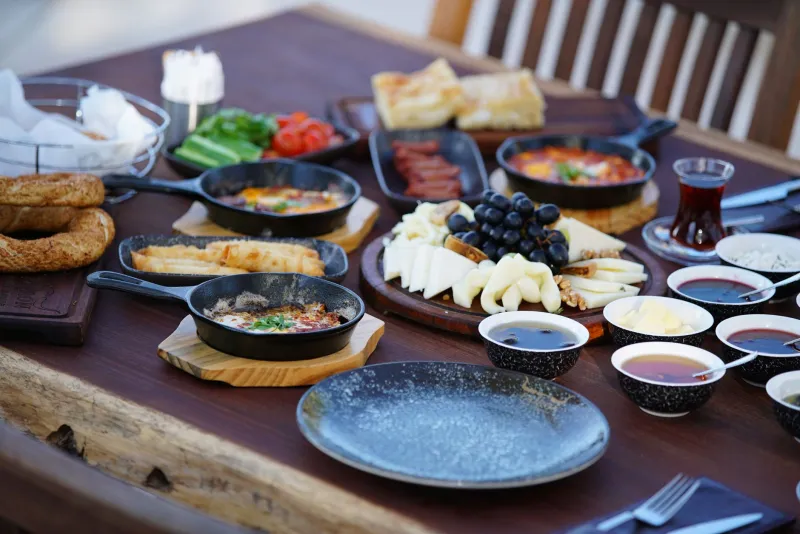
Most Americans who visit Gaziantep arrive with one thing on their minds: the food. And honestly, that's fair. The city holds a UNESCO Creative City of Gastronomy designation, its baklava is the stuff of legend, and its kebab culture alone could fill an entire travel itinerary. But spend a little time digging into why Gaziantep developed such an extraordinary culinary identity, and you'll keep bumping into something unexpected — looms, threads, and the ghost of a weaving industry that shaped this city just as profoundly as any spice market ever did.
A City Built on Precision
For centuries before Gaziantep became Turkey's undisputed food capital, it was a textile powerhouse. The region's carpet and kilim weaving traditions date back well over a thousand years, and at the height of the Ottoman Empire, Gaziantep's weavers were exporting intricate handmade rugs across the known world. The craftsmanship required was staggering — a single traditional carpet could take months or even years to complete, with weavers memorizing complex geometric patterns and executing them knot by knot, row by row, without a single shortcut.
That culture of precision didn't stay confined to the loom room. Historians and local cultural researchers have long noted that cities with strong artisan craft traditions tend to transfer those same values — attention to detail, respect for process, and zero tolerance for cutting corners — into other areas of daily life. In Gaziantep, food became the most visible beneficiary.
Consider the city's approach to something as seemingly simple as a stuffed grape leaf. Where other regional cuisines might treat dolma as a quick weeknight dish, Gaziantep cooks treat it as a project. The rice filling is spiced with a precision that borders on scientific. The rolling technique is standardized across households in ways that outsiders find almost bewildering. Ask a local grandmother why she does it a particular way and she'll look at you the way a master weaver might look at someone suggesting they skip a row of knots — the question barely makes sense.
The Knowledge Transfer Problem (And How Both Crafts Solved It)
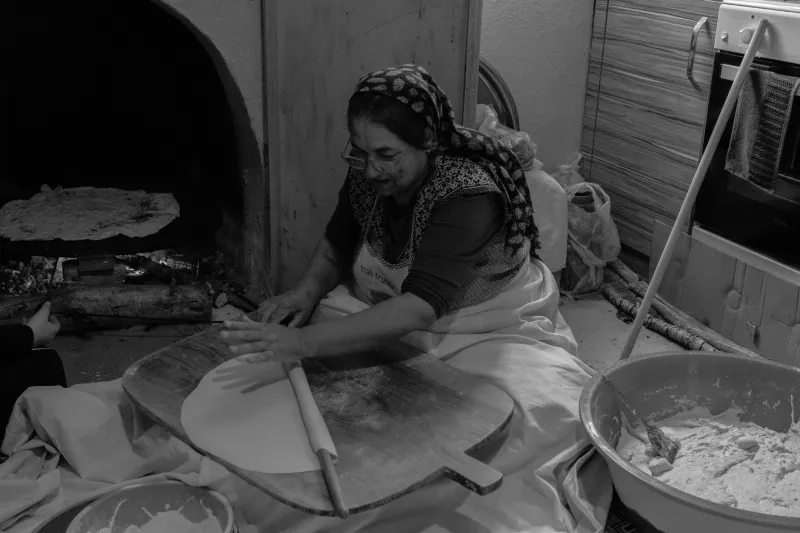
One of the most fascinating parallels between weaving and cooking in Gaziantep is how both traditions handled the transmission of knowledge across generations. In a pre-literate or semi-literate society, you can't just write down a carpet pattern or a recipe and hand it to the next generation. You have to show them. Sit them down beside you. Let them watch, then try, then fail, then try again.
This apprenticeship model — which dominated both the weaving workshops and the family kitchens of Gaziantep for centuries — created something remarkable: an incredibly consistent, highly refined culinary canon that resisted dilution or casual reinvention. Young women learning to cook in Gaziantep households weren't just picking up recipes; they were being initiated into a system of standards, the same way a weaving apprentice wasn't just learning a pattern but absorbing an entire aesthetic philosophy.
The result, visible in Gaziantep kitchens today, is a kind of collective culinary memory that functions almost like a shared cultural document. Walk into ten different homes and order the same dish, and you'll find remarkable consistency — not because everyone is following the same written recipe, but because the knowledge was transmitted through the same careful, hands-on apprenticeship model that kept carpet patterns intact across centuries.
Pride of Craft, Pride of Table
There's another dimension to this connection that's harder to quantify but impossible to miss once you've spent time in the city: the sheer cultural pride that Gaziantep people attach to both their textiles and their food. This isn't casual regional boosterism. It runs deep.
In weaving communities, the quality of a household's carpets was a public statement about the family's values, discipline, and social standing. A poorly woven rug wasn't just aesthetically inferior — it was a kind of moral failing. That same framework, transferred to the kitchen, helps explain why Gaziantep cooks are famously unwilling to compromise on ingredients, technique, or time. Serving a substandard meal is, in a very real cultural sense, a reflection on the cook's character.
For American visitors accustomed to a food culture that often prizes speed and convenience, this can be genuinely disorienting. A Gaziantep host who spends two days preparing a meal for guests isn't being excessive — they're being correct. The effort is the point. The care is the message.
What Survives, What Has Changed
It would be dishonest to pretend the weaving industry in Gaziantep is what it once was. Industrial textile production reshaped the global market over the 20th century, and many of the great weaving workshops that once defined the city's economy have disappeared or dramatically scaled back. The looms that once filled entire neighborhoods are largely gone.
But the cultural values they embedded in the city? Those are still very much present — most visibly in the kitchens. The discipline, the pride, the apprenticeship model, the refusal to accept mediocrity — all of it migrated, in a sense, from the weaving room to the cooking fire. Gaziantep's food culture became the primary carrier of values that the textile industry could no longer sustain.
For travelers who want to understand why Gaziantep's food hits differently than anywhere else they've eaten, this is part of the answer. You're not just tasting great ingredients or clever technique. You're tasting centuries of a city's worth of accumulated craftsmanship — the same spirit that once went into every knot of every carpet, now expressed in every fold of every börek and every layer of every baklava.
The threads changed. The care never did.