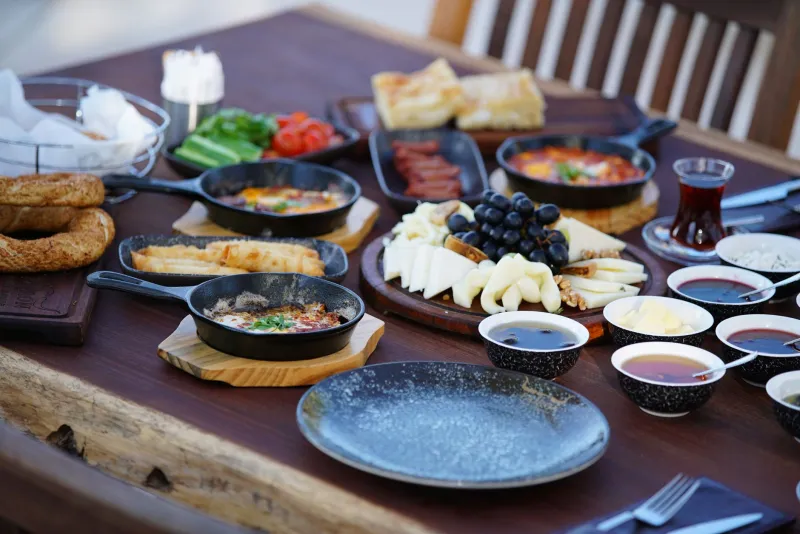
Every Dish on This Table Is 4,000 Years Old: Eating Through Mesopotamian History in Gaziantep
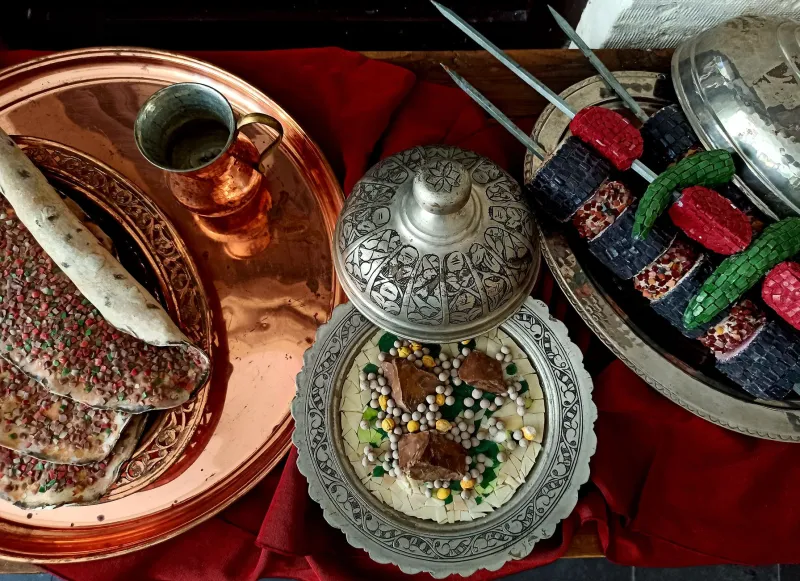
Somewhere between the lentil soup and the stuffed grape leaves, it hits you. You're not just eating dinner. You're sitting inside a civilization.
Gaziantep sits at the northern edge of the Fertile Crescent — that sweeping arc of land where agriculture, writing, and organized society first took root. The city's coordinates place it almost exactly where ancient Mesopotamia bled into Anatolia, where the Euphrates River carved trade corridors that empires would fight over for millennia. That geography isn't just a history lesson. It's a recipe.
When locals say Gaziantep food is "different," they mean it in a way that goes far deeper than flavor. The dishes served at a traditional family table here are, in the most literal sense, archaeological artifacts. Understanding what's in them — and why — turns an ordinary dinner into the kind of immersive experience that no museum exhibit, however well-funded, can replicate.
The Wheat Is Older Than You Think
Let's start with the bread, because everything in Mesopotamia started with bread.
The flatbreads served alongside a Gaziantep meal — thin, slightly charred, pulled from a clay oven called a tandır — descend in almost unbroken lineage from the unleavened grain cakes that Sumerian households were baking around 3000 BCE. Emmer wheat, one of the earliest domesticated grains in human history, was cultivated in this precise region. Modern Gaziantep bakers still prefer locally milled durum wheat with a high protein content that produces a chew and density you simply don't get from commercial flour.
When you tear that bread and use it to scoop up a walnut-and-pepper spread, you're performing an act that a Hittite farmer's wife would have recognized immediately.
The Spice Route Runs Through Your Plate
The spice profile of Gaziantep cuisine reads like a map of ancient trade. Cumin, which originated in the eastern Mediterranean and was prized enough to appear in Egyptian tombs as currency. Sumac, harvested from shrubs that grow wild across the Levant and used as a souring agent long before lemons arrived in the region. Black pepper, which traveled overland from India through the very trade routes that made this city wealthy.
The Silk Road didn't just move silk. It moved flavor. Gaziantep was a caravanserai city — a waypoint where merchants rested, traded, and inevitably shared what they were carrying. Every empire that passed through left something behind on the spice shelf. The Persians brought saffron. The Romans brought a culture of fermented sauces. The Arabs brought sophisticated techniques for working with dried fruit and nuts in savory dishes.
You taste all of them in a single bowl of beyran soup — a thin, intensely flavored broth made with lamb, rice, and a clarified butter finish that would have been completely familiar to a medieval trader stopping for the night.
What the Ottomans Formalized
By the time the Ottoman Empire absorbed this region in the early 16th century, Gaziantep was already a mature culinary city. What the Ottomans did was formalize it. Palace cooking culture created hierarchies of technique — the right way to pound meat, the correct ratio of fat to lean in a köfte, the specific temperature at which clarified butter should hit a copper pan.
Those standards filtered down from Istanbul's palace kitchens into the households of Gaziantep's prosperous merchant class, where they were adopted, adapted, and eventually made permanent through generations of female transmission. Grandmothers taught daughters who taught granddaughters. The Ottoman techniques became so embedded in local practice that today's cooks often don't think of them as "Ottoman" at all. They're just the right way to do things.
The stuffed vegetables you'll encounter — peppers, eggplant, zucchini packed with a spiced rice and meat mixture — are a direct inheritance from this period. Ottoman court cuisine was obsessed with dolma, a word that simply means "stuffed." The Gaziantep versions are more intensely spiced and often finished with a tart tomato or pomegranate sauce that reflects the region's older, pre-Ottoman palate asserting itself.
Pomegranate: The Ancient Fruit That Never Left
Nothing on a Gaziantep table carries more historical weight than pomegranate.
This fruit appears in Sumerian texts. It's carved into Assyrian palace reliefs. It shows up in Greek mythology, in the Hebrew Bible, in Byzantine church mosaics. For the people living in this part of the world, the pomegranate wasn't a trendy superfood — it was simply part of life, as basic and essential as water.
In Gaziantep cooking, pomegranate molasses (nar ekşisi) functions as a souring and deepening agent in everything from meat marinades to salad dressings. It's made by reducing fresh pomegranate juice until it becomes thick, dark, and intensely tart — a process that requires no technology beyond a pot and a fire, and that has probably been practiced in this valley for four thousand years without significant modification.
Drizzle it over a plate of grilled lamb and you are, whether you know it or not, eating something that would have tasted recognizable to an Assyrian merchant.
Sitting Down to History
American travelers often approach historical sites as things to look at. Gaziantep asks you to eat them instead.
The city's archaeological museum holds genuine Neolithic artifacts — grinding stones, clay vessels, the physical infrastructure of ancient food production. They're worth seeing. But the more profound experience waits at a table in the old city, where a family spreads out a meal that has absorbed and survived every empire, every invasion, every cultural shift that history has thrown at this corner of the world.
The lentil soup is thick with cumin and finished with a swirl of red pepper butter. The flatbread is scorched at the edges. The pomegranate molasses is so tart it makes your eyes water slightly. None of it is performing history for you. It just is history — continuous, uninterrupted, and available for dinner at around seven o'clock.
You could spend a week in a Mesopotamian history seminar and come away with less understanding of this place than one slow meal in Gaziantep will give you. The difference is that one of those options also feeds you.