How to Build a Gaziantep Mezze Table: The Philosophy Behind Every Plate
Most Americans encounter mezze the same way: a restaurant menu lists six or eight small plates under a single category, you order a few, they arrive all at once on a crowded table, and everyone eats quickly before the entrées show up. It's fine. Sometimes it's really good. But it's missing the point by about a mile.
In Gaziantep, mezze is not a category on a menu. It's a philosophy of eating — a deliberate, unhurried approach to building flavor and building conversation simultaneously. The plates arrive in a particular order for a reason. The combinations are chosen with intention. The pacing is part of the meal itself. Get that right, and you're not just eating well. You're doing something much older and more meaningful.
Here's how it actually works — and how to bring it home.
Start With the Concept, Not the Recipes
Before you go looking up what dishes to make, understand what mezze is trying to accomplish. The goal isn't variety for variety's sake. A proper Gaziantep mezze table is building an argument — moving from lighter, brighter flavors toward richer, more complex ones, creating a kind of flavor narrative that prepares the palate for whatever comes next.
Think of it less like an appetizer course and more like the opening chapters of a novel. Each plate introduces characters — a particular herb, a specific heat level, a textural contrast — that will reappear and develop as the meal progresses. Nothing is random. Nothing is filler.
This is the single most important thing to internalize before you start cooking.
The Architecture of the Spread
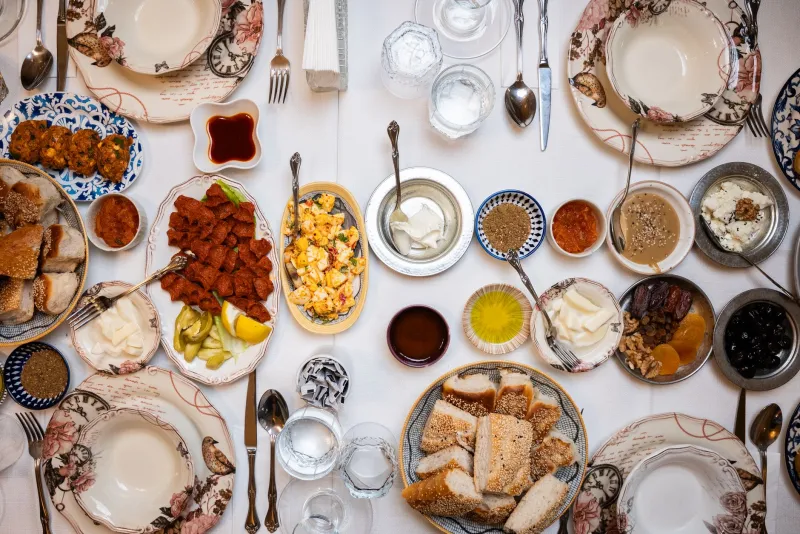
A traditional Gaziantep mezze table tends to move through three loose phases, though they blend and overlap rather than arriving in discrete waves.
The openers are cool, acidic, and light. Think cacık (yogurt with cucumber and dried mint), a simple plate of fresh herbs, maybe a wedge of aged white cheese. These dishes are doing two jobs: refreshing the palate and signaling to your guests that the pace here is going to be slow and deliberate. You're not rushing to the main course. You're settling in.
The middle layer is where Gaziantep's specific character starts to show up. This is where you'll find the city's distinctive dips and spreads — acılı ezme (a finely chopped tomato and pepper paste with a serious heat signature), patlıcan salatası (smoky roasted eggplant), and muhammara, the walnut-red pepper spread that Gaziantep does better than anywhere else on earth. These dishes have more body, more complexity, more personality. They want bread — good bread, warm if possible — and they want time.
The anchors round out the spread with dishes that have real weight: stuffed grape leaves, slow-cooked legumes, perhaps a small plate of spiced ground lamb. These aren't heavy in the way a steak is heavy. They're satisfying in a way that feels earned rather than imposed.
The Bread Situation
You cannot do this without good bread, full stop. In Gaziantep, flatbreads fresh from a stone oven are the utensil, the vehicle, and honestly sometimes the best thing on the table. For a home recreation, look for a good Turkish or Middle Eastern bakery if you're in a city with one. Otherwise, a quality pita warmed in a dry skillet will get you most of the way there. Sourdough flatbread works well too.
The bread isn't a side. It's structural.
Pacing Is the Secret Ingredient
American dining culture is, by global standards, fast. We're trained to expect dishes promptly, to clear plates efficiently, to move toward the check. A Gaziantep mezze table requires you to actively resist all of that.
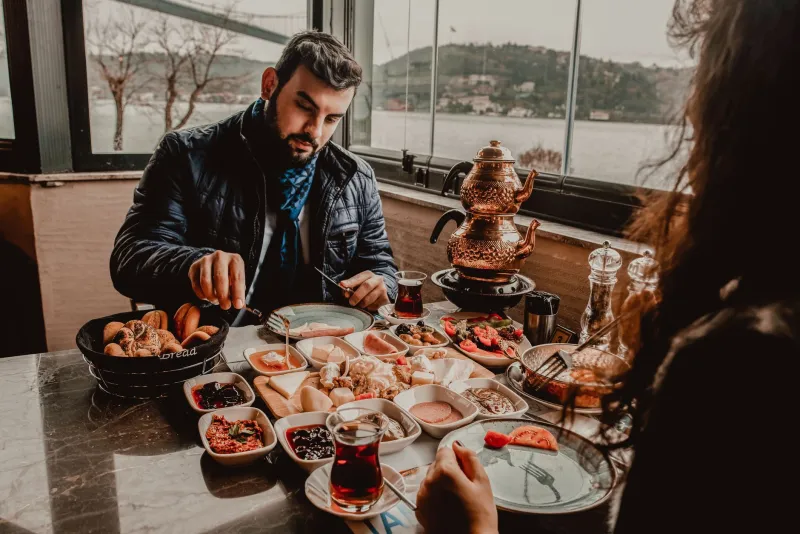
Plates come out when they're ready, not all at once. The table refills — more bread, a fresh plate of herbs, a second round of acılı ezme because someone finished the first one. Conversation happens between bites, not around them. The meal breathes.
If you're hosting this at home, the practical implication is to stop trying to orchestrate simultaneous service. Make dishes ahead, bring them out gradually, and give your guests explicit permission to slow down. Tell them upfront: this is a two-hour table, minimum. Watch how quickly the energy in the room changes.
What to Actually Make
For a home mezze spread that captures the Gaziantep spirit without requiring professional kitchen skills, here's a workable starting lineup:
- Cacık — yogurt, grated cucumber, dried mint, a drizzle of olive oil. Takes ten minutes.
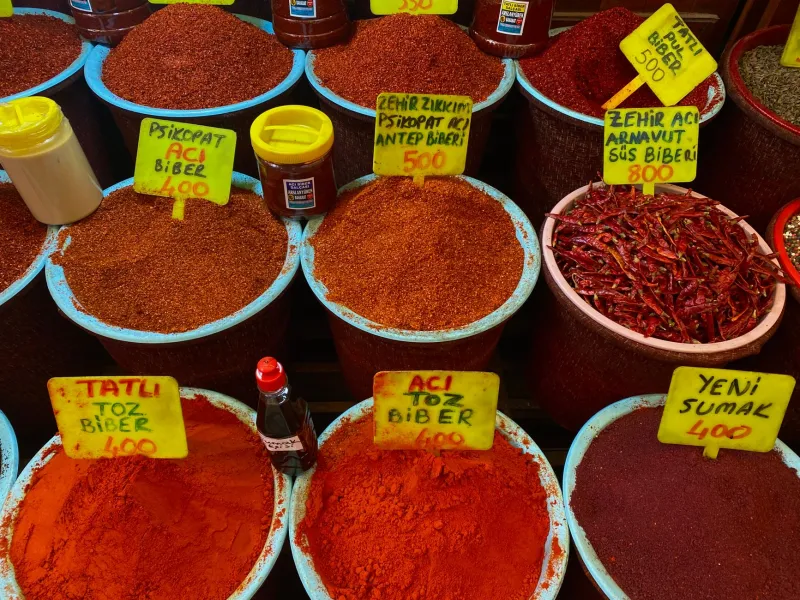
- Acılı ezme — finely diced tomatoes, red onion, green peppers, dried Urfa chili, pomegranate molasses, olive oil. This is the dish that will make your guests ask for the recipe.
- Muhammara — roasted red peppers blended with walnuts, breadcrumbs, cumin, and Aleppo pepper. Rich, smoky, and completely addictive.
- Haydari — thick strained yogurt with garlic, dill, and walnuts. Heavier than cacık and a good bridge into the middle of the spread.
- Stuffed grape leaves — buy good quality jarred ones if you're not up for making them from scratch. No shame in that.
- A cheese plate — aged white cheese, maybe a sharp feta, with fresh walnuts and a small dish of honey nearby.
This isn't a definitive list. The point is the logic, not the specific dishes.
The Table Is the Experience
Here's the thing that gets lost in translation most often: a Gaziantep mezze table isn't primarily about the food. The food is excellent, but it's the vehicle for something else — a particular quality of presence, of shared attention, of time that feels intentional rather than consumed.
When you build this table at home, you're not just cooking Turkish food. You're proposing a different relationship to the meal itself. Slower. More conversational. More generous with time.
Gaziantep has been doing this for centuries. Your dinner guests will be glad you finally caught on.