The Spice Blends Hiding in Plain Sight: Gaziantep's Secret Seasoning Weapons Explained
You can read every food article ever written about Gaziantep and come away thinking the city's culinary magic lives in its baklava technique or its pistachio orchards. Those things matter. But spend a morning in the spice market talking to the merchants who've been blending and selling seasonings for thirty or forty years, and a different picture emerges.
The real engine of Gaziantep's flavor isn't any single ingredient. It's the blends — the proprietary combinations, the regional variations, the house mixes that a particular merchant's grandmother developed and that have never been written down anywhere. These are the seasonings that make a Gaziantep kebab taste fundamentally different from one made with technically identical ingredients in Istanbul or Ankara. And most food writing about this city barely mentions them.
Let's fix that.
Why Blends Matter More Than Single Spices
American spice culture has gotten significantly more sophisticated over the past decade. Za'atar is in grocery stores now. Aleppo pepper shows up on cooking shows. Sumac has its own fan base. But there's still a tendency to think about spices individually — you add cumin, you add coriander, you add paprika — rather than understanding the way pre-built blends create flavors that are genuinely greater than the sum of their parts.
In Gaziantep, blending is considered a craft skill on par with cooking itself. The spice merchants here aren't just selling ingredients; they're selling finished flavor profiles developed over generations. When a home cook in Gaziantep buys her baharat mix from the same stall her mother used, she's not being brand loyal in the American consumer sense. She's accessing a specific flavor memory that is woven into the food culture of her city.
That context matters when you're trying to understand why the spices you bring home from the bazaar will make your food taste noticeably different from anything you can replicate with off-the-shelf American products.
The Blends Worth Knowing
Baharat is the starting point, but calling it a single thing is misleading. Baharat just means "spices" in Arabic, and the specific composition varies dramatically by region and by vendor. Gaziantep's version tends to be heavier on black pepper and allspice than Turkish blends from other regions, with a deeper, more savory character than the sweeter Levantine versions you might find in Lebanese grocery stores in the US. It's the base seasoning for countless meat dishes, and getting the right version makes a significant difference.
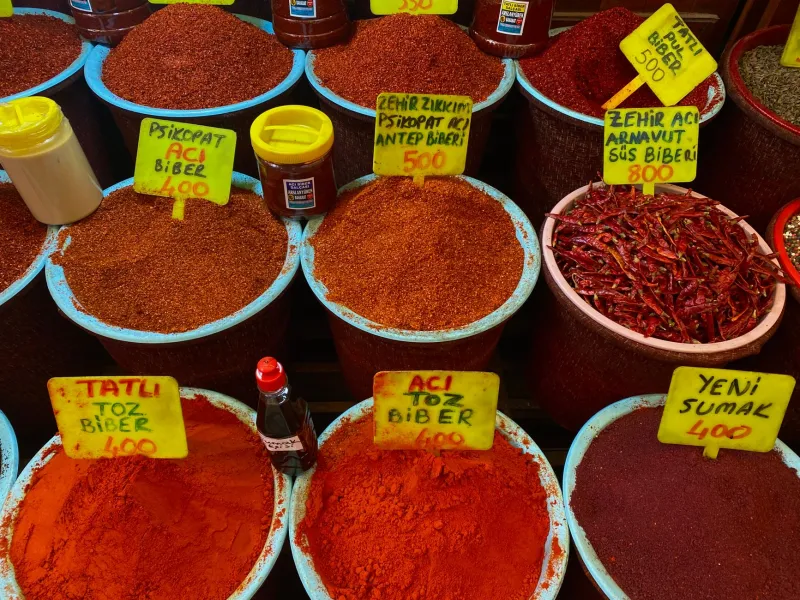
Kırmızı biber — red pepper — is where Gaziantep really separates itself. The city sits close to the pepper-growing regions of southeastern Anatolia, and the red pepper products here come in a spectrum that most Americans have never encountered: sweet, mild, smoky, medium-hot, and a scorching variety that locals handle with a casual confidence that will humble you. More importantly, Gaziantep merchants sell red pepper in forms beyond simple dried flakes — including a sun-dried paste and a slow-roasted ground version with an almost chocolate-like depth. These are not interchangeable with the red pepper flakes on your pizza table.
Isot biber, also called Urfa pepper, deserves its own paragraph. It's grown in nearby Şanlıurfa and has become more available in American specialty stores, but the versions sold in Gaziantep's bazaars are often fresher and more complex than what crosses the export chain. Isot has a low, slow heat — it doesn't hit you immediately — and a distinctive dark, slightly oily character with notes that people often describe as raisin-like or even chocolatey. It's the secret behind acılı ezme's addictive quality and shows up in numerous kebab seasonings.
Cumin-coriander blends for köfte are another category where local specificity shows up clearly. The ratios used in Gaziantep's meatball seasonings are different from what you'll find in recipe books, and some vendors add a small percentage of dried fenugreek that gives the blend a faintly bitter, almost nutty undertone. Ask a merchant to show you their köfte spice mix and compare it across three stalls — the differences will be subtle but real.
What You Can Actually Export
Here's the practical question American visitors always end up asking: what can I bring home, and will it actually survive the trip and customs?
Dried whole spices and ground blends are generally fine to bring into the US in personal quantities. Customs focuses on fresh produce, meats, and plant material — a bag of dried baharat isn't going to trigger any flags. The items to be careful about are the red pepper pastes, which are technically a processed food product and can occasionally be flagged, though many travelers bring them through without issue.
For purchasing, prioritize whole dried spices and pre-blended dry mixes. They hold their potency better during travel and storage than pastes, and they're easier to pack. Vacuum-sealed bags, available from most bazaar vendors, make a significant difference in how long the blends stay fresh after you get home.
What Cannot Be Replicated
Some things simply don't survive the journey — not physically, but in terms of flavor context. The freshly ground red pepper paste that a vendor makes in small batches from peppers grown within fifty miles of the city is not a product that exists in American commerce. You can find approximations. You can find decent Turkish red pepper paste in Middle Eastern grocery stores in most major American cities. But the specific combination of pepper variety, sun exposure, and grinding technique that produces what you taste in Gaziantep is not something that survives export at scale.
The same is true of the freshest baharat blends. Spices lose volatile compounds quickly after grinding, and the blends you buy directly from a Gaziantep merchant who ground them recently will taste noticeably more alive than anything that has spent weeks in a shipping container.
This is not an argument against buying and bringing home what you can. It's an argument for going to Gaziantep yourself, which was always the real point.
Where to Start in the Bazaar
For first-time visitors navigating the spice market, a few practical tips: don't buy from the first stall you see. Walk the market, compare colors and aromas, and look for vendors who will let you smell before you buy — most will. Ask specifically for the Gaziantep-style versions of anything, since vendors who sell to tourists know that out-of-region varieties often get passed off as local.
And buy more than you think you need. You will run out faster than you expect, and the shipping situation for reordering from abroad is, to put it charitably, complicated.
The blends are worth the effort. Your kitchen will tell you so.